




Il percorso
The "da Camino" family was one of the most prominent noble houses in the Treviso area, extending their reach from Belluno to upper Treviso between 1100 and 1350. Lately, I’ve been curious about where the name "Da Camino" actually came from. Once I found the village of the same name near Oderzo, I thought it was the perfect excuse to create a new route.
Starting from the parish oratory in Camino, we immediately head to the banks of the Monticano river. From there, we turn left and follow the riverbank path straight toward the heart of Oderzo.
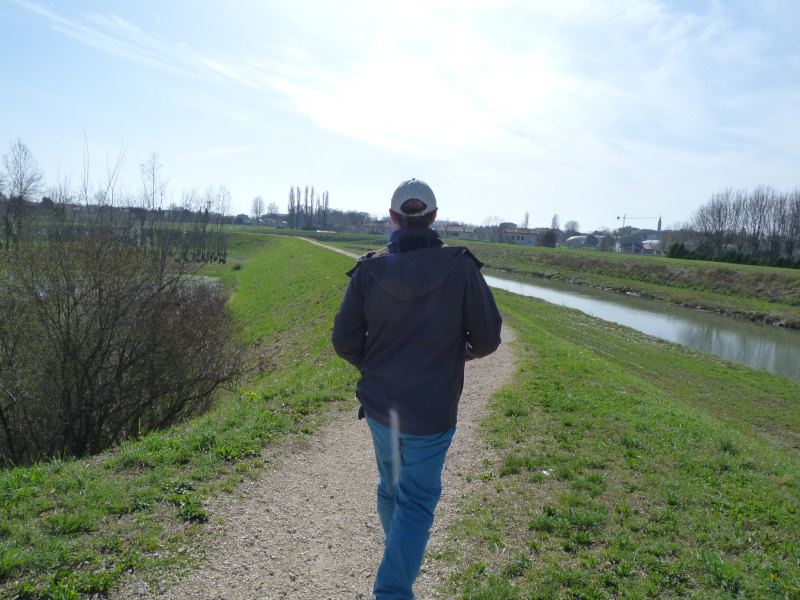 Monticano Riverbank
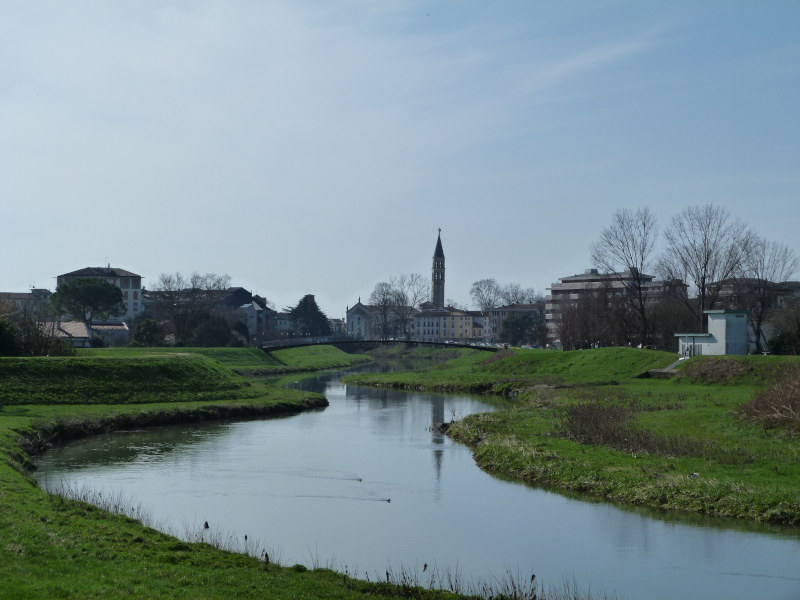 Oderzo is near
In the distance, we can spot the bell tower of the Oderzo Cathedral, with the backdrop of the Treviso Prealps behind us. We reach the main road and cross it—some crosswalks here would certainly be useful!—to get back onto the riverbank path. The trail makes a wide curve and seems to drift away from the river, but then draws close again. We keep going until we reach the center of Oderzo (Via Cesare Battisti); we turn right, cross the bridge, and find ourselves in Piazza Grande, with the three Roman columns on our left.
We step inside the Oderzo Cathedral. The architecture is simple and austere, immediately calling to mind its medieval past. As we exit, we notice that the eaves of the building in front of us are completely covered in frescoes.
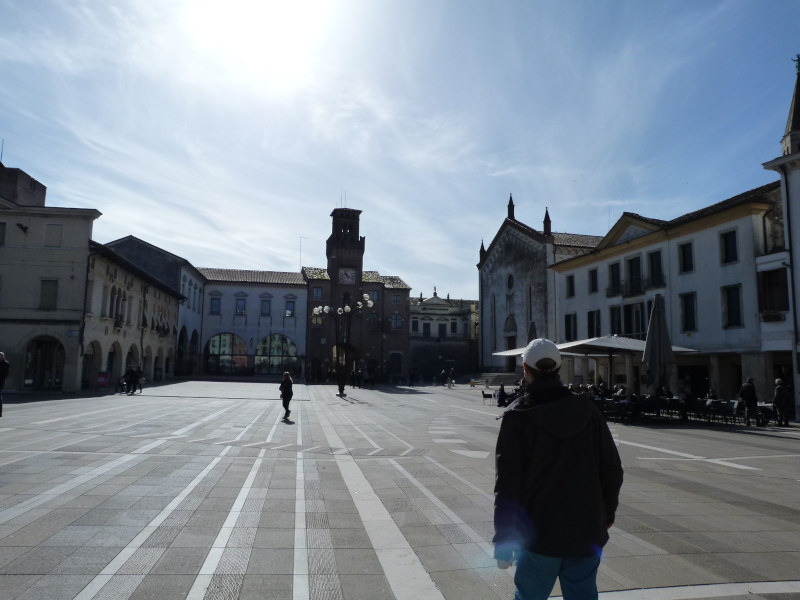 Piazza Grande in OderzoInside the Cathedral
Evelina calls out to me: "Daniele, did you see your favorite cat is here too?" I look around, but there isn't a cat in sight. She looks at me and laughs: "Oh come on, look closer—but look up!"
I start searching again to see if there are any cats in the windows, but nothing. A bit annoyed, I start walking, and when I get near the Torresin (the tower next to the Cathedral), Evelina chimes in again: "Seriously, look up!" Above the doorway, there it is—a Winged Lion of St. Mark... no wonder I couldn't find a cat!
After passing the Torresin, we head down Via Umberto I. Tucked between two buildings is a tiny little church, where you can see a fresco of the Madonna and Child. We continue past the shops on Via Alberto Martini; under the porticoes, there is a busy hustle and bustle of people.
After the second bridge over the Gattolé Canal, we turn right onto Via D'Annunzio. Then, we take the second left onto Via del Bersagliere.
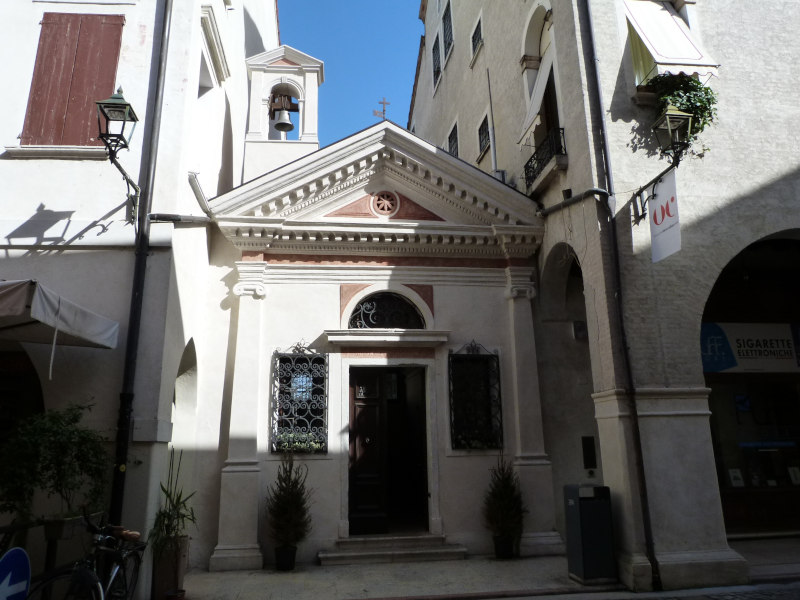 Church between the houses
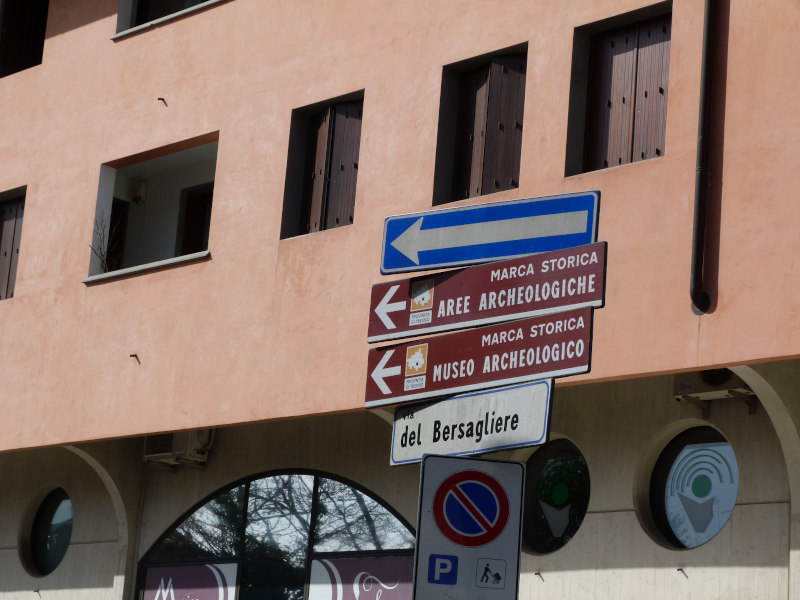 Via del Bersagliere
Once we reach the parking area, we stay to the right and come to a small, fenced playground located behind the "Patronato Turroni" school.
We walk to the right (keeping the playground on our left) until we reach Via Monsignor Paride Artico. We follow this road to the end, turning left, passing by the Carabinieri station, and finding ourselves back on Via Gabriele d’Annunzio.
We cross the street and take the little lane that leads to the Oderzo Cinema. From there, we take the small path on the right side of the building and, in no time at all, we are at the Ca’ Diedo Public Gardens. Since we don’t have children with us, we don’t stop to play—even though, whether out of habit or a sudden spark of childhood memory, the urge to go down the slide or hop on a swing is definitely there!
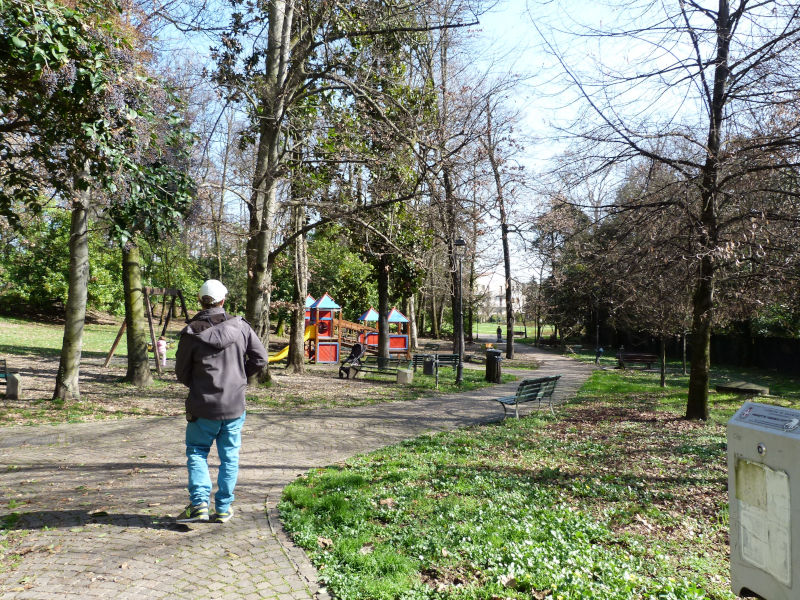 Ca' Diedo Public Gardens
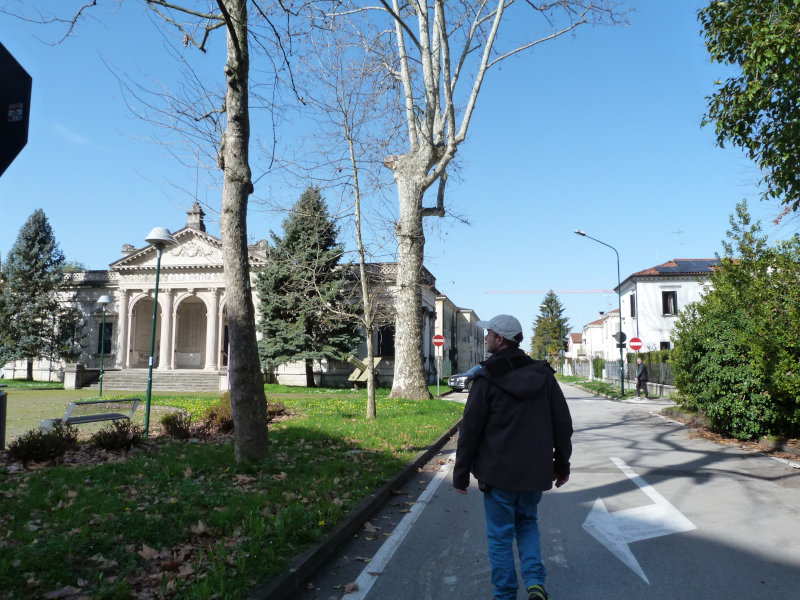 War Memorial
We walk through the entire public garden, passing the statue of Luigi Luzzatti, and then head back up to exit through the gate that opens almost directly onto Piazzale della Vittoria and the War Memorial.
From here, we head right along the Ex Foro Boario parking area (leaving the War Memorial behind us) and, after just a few steps, we reach Via Giuseppe Mazzini. We turn left and then immediately right, following the signs for the Roman Forum.
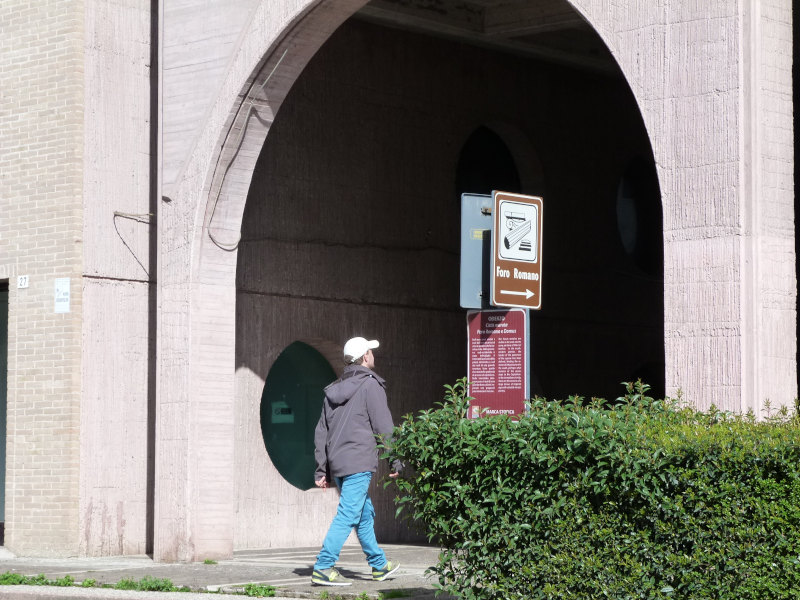 Entry of Foro Romano
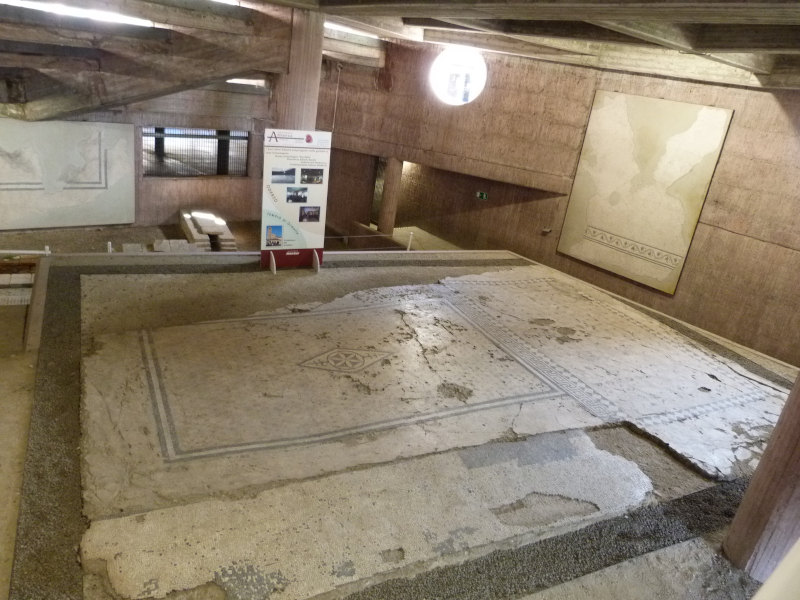 Roman mosaics
It is amazing to see how Roman mosaics have been preserved in the basement of a modern building. Admiring these works, I’m reminded of what a local builder told me many years ago: when constructing new buildings in Oderzo, builders are always on edge. If even a single Roman amphora or coin is found during excavation, everything must stop to call the Heritage Authorities.
Continuing our tour of the mosaics, we exit onto Via Roma. From here, we turn left and then right into Via dei Mosaici. This is a narrow alley where various excavation campaigns have uncovered an ancient road (cardo) and several remains of Roman houses (domus) from the Augustan age. In the space in front of a small building, two mosaics belonging to an ancient domus are visible. Unfortunately, we couldn't manage to find the ancient well, but perhaps you’ll be luckier than we were!
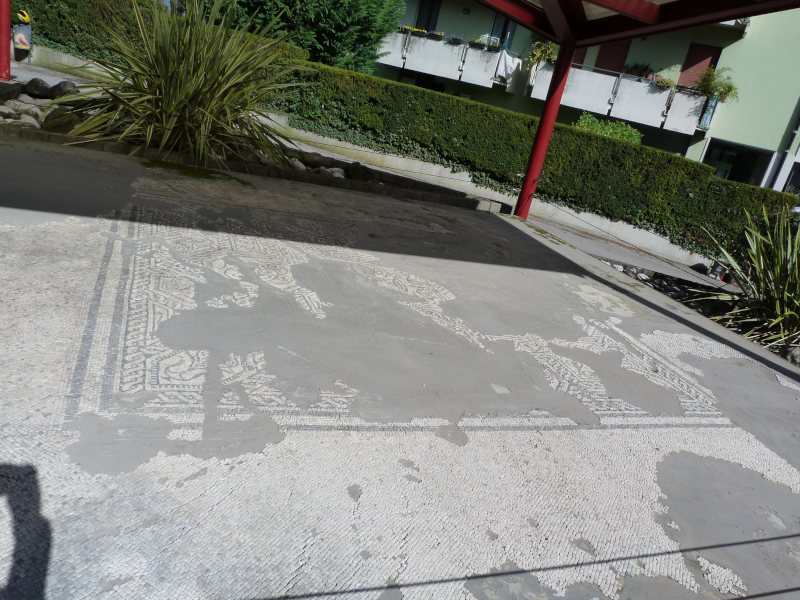 Mosaics in Via dei Mosaici
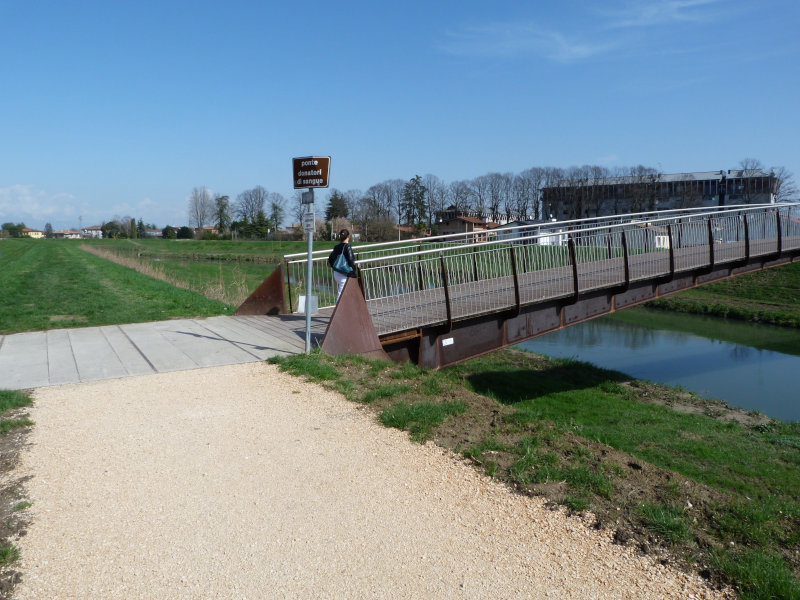 Bridge Donatori di Sangue
Our visit to Oderzo has come to an end. We reach the roundabout and head right, then start walking along the Monticano riverbank to the left (heading back towards the car). We continue until we reach the Donatori di Sangue Bridge, cross over to the other side of the bank, and keep going left until we arrive back in Camino.
Photo Gallery


Traccia Gps
What to see
The Cathedral of Oderzo A place of austere charm. Built upon a pre-existing temple dedicated to Mars, it houses valuable works by Palma il Giovane, Domenico Tintoretto, and a copy of Cima da Conegliano's altarpiece, "The Sacred Conversation.".
War Memorial
Roman mosaic near the city center. A hidden archaeological treasure in the heart of the city, where stunning Augustan-era mosaic floors are preserved inside modern buildings. Walking among these remains allows you to relive the atmosphere of ancient Opitergium, through the traces of elegant villas and ancient Roman streets.
Refreshment Points
Dining and Cafes in Oderzo
Curiosities
The original altarpiece of "The Sacred Conversation" by Cima da Conegliano (the copy of which is seen inside the Cathedral) is currently held at the Brera Art Gallery in Milan. It was actually removed from the Oderzo Cathedral by Napoleonic troops in the early 1800s.